
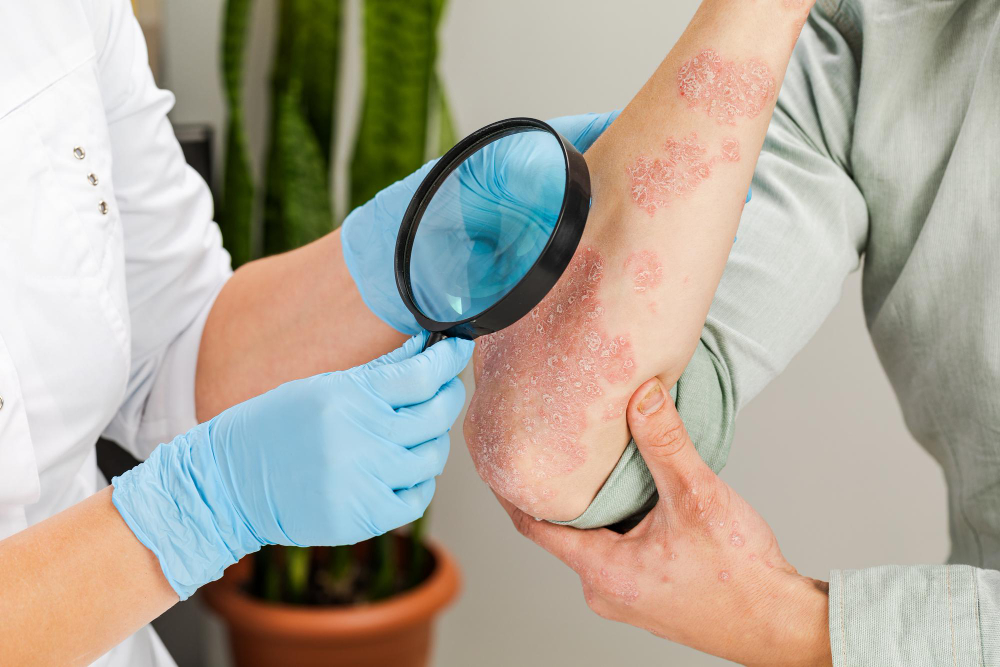
What is Psoriasis?
Psoriasis is a long-term skin condition. It causes red, scaly patches on the skin. These patches can be itchy, sore, or even crack and bleed. For many people, managing psoriasis symptoms with personalised supportive care is important. Psoriasis can appear on the elbows, knees, scalp, or other areas. Sometimes, it makes daily tasks harder. For example, you may feel self-conscious about your skin. In addition, the itching can disturb your sleep. Because of this, psoriasis can affect both your body and your mood.
Causes and Triggers of Psoriasis
Psoriasis is not contagious. Instead, it happens when the immune system works too fast. This causes skin cells to grow quickly. While the exact cause is not clear, several things can trigger flare-ups:
Because triggers vary, it helps to track what affects your skin.
The Role of Personalised Supportive Care in Psoriasis Management
Personalised supportive care means care that fits your unique needs. Each person’s psoriasis is different. Therefore, what works for one person may not help another. Supportive care includes more than just medicine. It also covers skin care, stress relief, and healthy habits. With personalised supportive care, you get a plan made just for you. This plan helps control symptoms and improve your quality of life. For example, your plan might include gentle skin creams, stress management, and advice on diet. As a result, you may notice fewer flare-ups and better skin health.
How Homeopathy Supports Psoriasis Care
Homeopathy is a type of natural medicine. It uses small doses of substances to help the body heal itself. In homeopathy, treatment is tailored to each person. Because of this, homeopaths look at your symptoms, lifestyle, and triggers. They then choose remedies that match your needs. For managing psoriasis symptoms with personalised supportive care, homeopathy focuses on the whole person, not just the skin.
Some common homeopathic remedies for psoriasis include:
However, homeopathic care is highly individual. A trained homeopath will create a plan just for you. This approach aims to reduce symptoms and support overall well-being.
Lifestyle Tips for Managing Psoriasis Symptoms
Along with supportive care, daily habits can help manage psoriasis. For example, gentle skin care and stress relief may lower flare-ups. Here are some tips you can try:
Because everyone is different, you may need to try several tips to see what works best for you.
When to Seek Professional Help
Sometimes, psoriasis needs more than home care. You should see a healthcare provider if you notice:
In these cases, a qualified homeopath at Shree Gajanan Pathology can help you find the right treatment. Early care can prevent complications and improve your well-being.